From Used Tool to Ready Tool: Close the Gaps in the Care Process
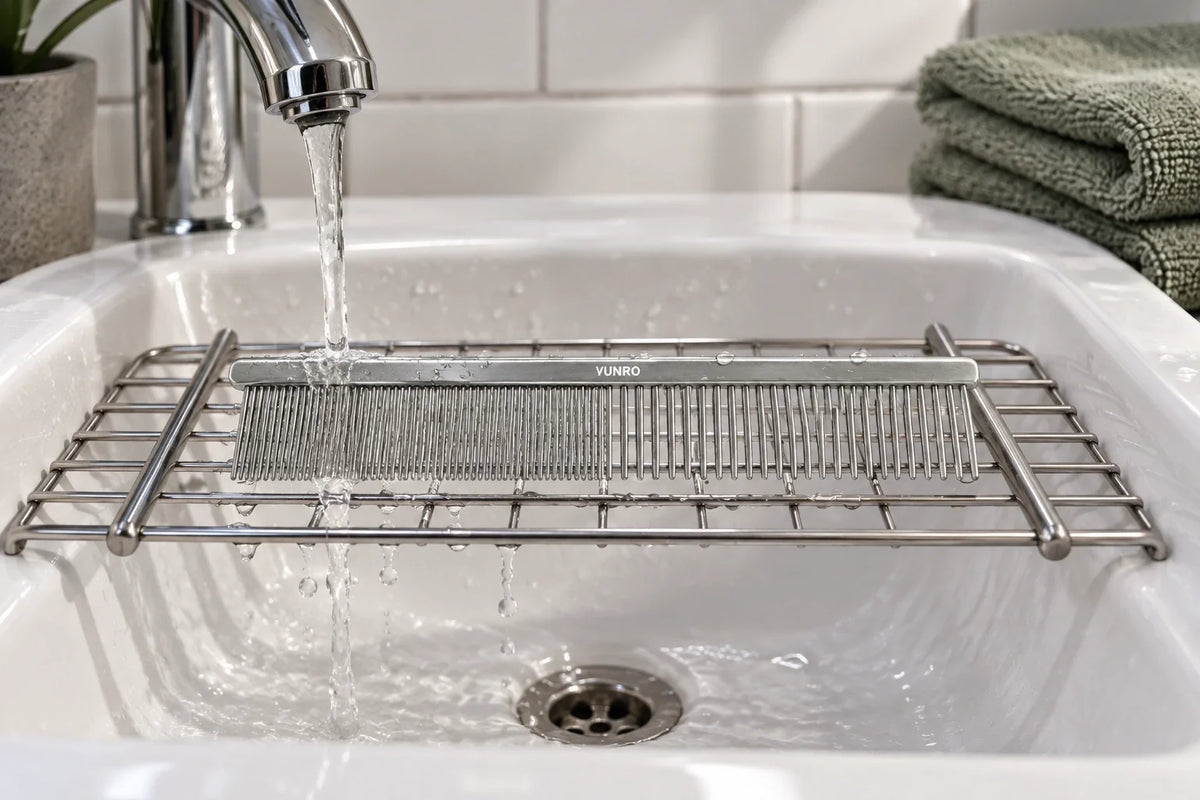
“Cleaned” is an incomplete status for a grooming tool. It may mean visible hair has been removed. It may mean a cleaning product has been applied. It may even mean the tool is still wet in a tray.
None of those descriptions tells the next groomer whether it is ready to use. A reliable process needs a clear route from used equipment to equipment that has completed every applicable care step.
Cleaning is a separate operation
CDC guidance distinguishes removal of soil from the subsequent disinfection or sterilisation process used in healthcare. It also notes that organic matter can interfere with germicides through chemical interaction or by shielding microorganisms. Those mechanisms explain why applying disinfectant to a dirty item is not equivalent to completing a cleaning process first. Healthcare reprocessing guidance is not permission to immerse a clipper or to apply a hospital protocol to every grooming tool. Read the cleaning guidance and factors affecting disinfection.
Write the route for the actual item
A solid metal comb, a scissor pivot, a blade assembly and an electrical trimmer do not present the same access or material questions. Start with the equipment instructions and the applicable product label. Record the permitted cleaning method, any disassembly, compatible chemical, dilution, contact time, rinsing where required, drying and subsequent care.
Do not invent a universal soaking time. “Metal” is not a sufficient compatibility description: finishes, joints, plastics, lubricated areas and electrical components can change what is appropriate.
If the instructions are incomplete or conflicting, clarify them before adopting the process. A product that is suitable for one surface is not automatically suitable for an assembled tool.
Make the unfinished stages visible
Use distinct, clearly identified places for used equipment, equipment undergoing the required process and equipment ready for service. Keep the clean storage area protected from splash, dirty hands and returning used items.
The important handover is the last one. Who checks that the required contact time was completed? Who confirms any required rinse, complete drying and permitted lubrication? Where does an item go if someone is interrupted halfway through?
A small salon can answer those questions with a simple tray system and a short checklist. It does not need an elaborate form. It does need to avoid treating “someone probably dealt with it” as a finished status.
Plan spare quantities around turnaround
If a tool is needed again before its care process can be completed, the schedule has created pressure to skip a step. Count how many serviceable copies are required while used ones move through the complete routine.
For example, a VUNRO 5-inch Coarse and Fine Straight Comb can have a defined checking role, while the 6-inch Double Skip Pin Comb has a different coat-work role. Buying one of each does not provide a true spare for both jobs. Choose duplicates where the appointment pattern actually requires them.
Keep damaged or corroded equipment out of the ready area. Completion of cleaning does not make a mechanically suspect tool suitable for use.
Test the handover, not just the written procedure
Ask a colleague who did not process the tool to explain its current status. Can they identify whether it is ready, still waiting or out of service without asking you? If not, improve the storage and labelling before adding more paperwork.
Our guide to reviewing an infection-related grooming complaint explains why a useful process review looks at the whole route. A clean-looking tool is one observation; a completed, appropriate care process is the working standard.
Keep learning
More from the Blade Blog

A Faster Clipping Pass Is Not Always a Faster Groom
Read the guide →
What a Grooming-Related Skin Infection Case Can Teach a Salon
Read the guide →